Elektra: The Ultimate Guide to Marvel’s Deadliest Assassin
TL;DR: Elektra Natchios is a Greek assassin created by Frank Miller who debuted in Daredevil #168 in 1981. Trained by the Hand, she’s been Daredevil’s lover, enemy, and eventual successor — a character defined by moral ambiguity, resurrection, and one of the most iconic deaths in comics.
Introduction
What makes a villain so compelling that fans send death threats when she dies?
That’s exactly what happened when Elektra was killed off in 1982. Created by Frank Miller as a one-off character, she became something far bigger: a symbol of the blurred line between heroism and violence in Marvel Comics. If you’ve seen her in films, TV shows, or comics and want the full picture, you’re in the right place.
This guide walks you through her complete Elektra comics history — who she is, how she started, why she matters, and how she became one of Marvel’s most enduring figures. No filler. No fluff. Just the story you came for.
Quick Overview: Key Facts About Elektra
- Full name: Elektra Natchios
- First appearance: Daredevil #168 (January 1981)
- Created by: Frank Miller
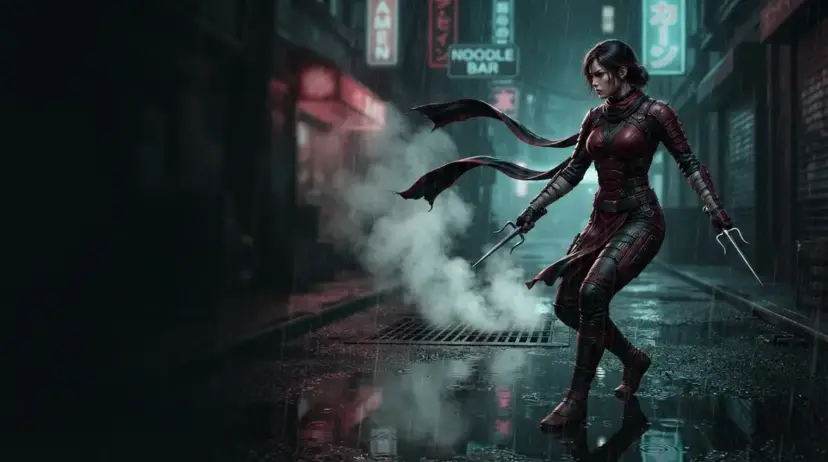
- Trademark weapon: A pair of sai
- Key affiliations: The Hand, the Chaste, S.H.I.E.L.D., the Thunderbolts, the Savage Avengers
- Notable aliases: Daredevil, Woman Without Fear
Who Is Elektra Natchios?
Elektra is a Greek martial artist and assassin who operates in the shadows of the Marvel Universe. She’s not a superhero in the traditional sense. She kills people for money. She’s been a villain, an antihero, and — at times — something close to a hero.
Definition: Elektra Natchios is a highly trained assassin of Greek descent, created by Frank Miller, who first appeared in Daredevil #168. She is defined by her relationship with Matt Murdock (Daredevil), her training under the Hand, and her willingness to cross moral lines that heroes won’t.
Marvel’s own character profile describes her simply: “An assassin and bounty hunter trained by the ancient ninja cult known as the Hand, Elektra Natchios has a history of getting her jobs done—even when her allies get in the way”. That’s the short version. The long version involves tragedy, resurrection, and one of the most complicated romantic relationships in comics.
How Did Elektra’s Comics History Begin?
Elektra’s origin is a story of trauma, training, and unintended consequences.
The Frank Miller Revolution
Frank Miller took over Daredevil in the late 1970s and reshaped the character forever. Elektra was part of that vision. She debuted in Daredevil #168 in January 1981, and according to Marvel’s retrospective on her first appearance, Miller intended that issue — essentially a filler story — to be her only appearance.
She was supposed to be a one-off. A former lover from Matt Murdock’s college days who had become a killer. A tragic figure who would disappear after one arc.
That’s not what happened.
From One-Off to Icon
Readers responded to Elektra immediately. She wasn’t a typical villain or a typical love interest. She was both, and neither. Miller kept writing her, building toward a devastating conclusion: her murder at the hands of Bullseye in Daredevil #181 in 1982.
That death was controversial. According to the Wikipedia entry on Elektra, Miller received death threats over the storyline and reported them to the FBI. Fans were that invested in a character who had existed for barely a year.
What Are Elektra’s Powers and Abilities?
Elektra doesn’t have superpowers in the traditional sense. She’s not bulletproof. She can’t fly. But she’s one of the most dangerous people in the Marvel Universe for a different reason: she’s trained to a level that borders on superhuman.
| Ability | What It Means |
|---|---|
| Master martial artist | Trained in multiple forms, including Ninjutsu, karate, and gymnastics-based combat. |
| Peak human conditioning | Strength, speed, reflexes, and endurance pushed to the limit of human potential. |
| Sai mastery | Her trademark weapons are a pair of sai, used for both lethality and precision. |
| Stealth and infiltration | She moves unseen, strikes without warning, and disappears before anyone reacts. |
| Hand training | The mystical ninja cult gave her access to techniques and knowledge most fighters never encounter. |
Marvel’s official profile notes that she’s “a master in multiple forms of martial arts, including Ninjutsu, which are heightened by her incredible gymnastic abilities”. She’s not a god. She’s a person who has pushed herself beyond what most humans can achieve — and that’s what makes her terrifying.
Why Is Elektra’s Relationship With Daredevil So Important?
Because it’s the emotional core of everything she does.
Elektra met Matt Murdock at Columbia University. They dated for a year. By all accounts, it was the happiest period of both their lives. That ended when terrorists kidnapped Elektra and her father, and Matt’s attempt to intervene led to her father’s death.
She left. She trained. She became something else.
When they met again, she was an assassin working for the Kingpin. He was Daredevil. The tension between them — love, betrayal, violence, and something that might be redemption — has driven countless storylines. She’s been his enemy, his ally, and the person who understands him better than almost anyone.
She’s also the woman who once stabbed his best friend and nearly killed him. Their relationship isn’t simple. That’s the point.
How Did Elektra Die and Come Back?
Elektra’s death in Daredevil #181 is one of the most famous moments in comics. Bullseye killed her with her own sai. Daredevil held her as she died. It was brutal, sudden, and permanent — except it wasn’t.
She was resurrected shortly after, though the story included a narrative note suggesting Daredevil should never encounter her again. That note didn’t last. She returned, headlined multiple ongoing series, and became a regular presence in Marvel continuity.
The pattern of death and return became part of her identity. She’s a character who refuses to stay gone — not because of cheap storytelling, but because her story keeps finding new angles. She’s been resurrected, brainwashed, replaced by a Skrull, and redefined multiple times.
What Are Elektra’s Best Comics and Storylines?
If you want to read her best material, here’s where to start.
Elektra: Assassin (1986–1987)
This is the one that changed everything. Written by Frank Miller and illustrated by Bill Sienkiewicz, this miniseries is surreal, experimental, and unlike anything else Marvel was publishing at the time. It’s not an easy read, but it’s essential.
Elektra Lives Again (1990)
Another Miller project, this graphic novel won an Eisner Award and explores Daredevil’s dreams about Elektra’s death and potential resurrection. It’s dreamlike, haunting, and visually stunning.
The 2001–2003 Ongoing Series
Written primarily by Greg Rucka, this series returns Elektra to her morally ambiguous roots. It’s a grounded, character-driven take that treats her as a person, not just a symbol.
Daredevil: The Man Without Fear (1993)
Miller returned to the character to explore Matt and Elektra’s relationship before he became Daredevil. It’s a darker, more aggressive take on their early romance, and it deepens the tragedy of what they become.
Elektra: Black, White & Blood (2021)
A horror-tinged anthology series featuring different creative teams. It’s not essential reading, but it’s a fascinating showcase of how different writers interpret her.
How Has Elektra Appeared in Film and TV?
Elektra’s screen history is almost as complicated as her comic history.
Jennifer Garner played her in the 2003 Daredevil film and the 2005 Elektra spin-off. Garner returned to the role in 2024’s Deadpool & Wolverine, giving the character a fitting send-off.
Élodie Yung played her in Netflix’s Daredevil Season 2 (2016) and The Defenders (2017). She’s set to return in Daredevil: Born Again Season 3, which gives the character another chance to shine in the MCU.
Each adaptation has taken a different approach. Garner’s version leaned into action-hero spectacle. Yung’s version leaned into psychological depth and the Hand mythology. Neither is a perfect translation of the comics, but both capture something essential about her.
Key Takeaways
- Elektra is a Greek assassin created by Frank Miller, first appearing in Daredevil #168 in 1981.
- She was intended as a one-off character but became one of Marvel’s most iconic figures.
- Her relationship with Daredevil — romantic, violent, and unresolved — defines much of her story.
- She’s died and returned multiple times, and she’s been a villain, antihero, and hero.
- Her best comics include Elektra: Assassin and the Greg Rucka run, both of which explore her moral complexity.
FAQ: Elektra
What was Elektra’s first appearance?
Elektra first appeared in Daredevil #168, cover-dated January 1981. She was created by Frank Miller and debuted as a former lover of Matt Murdock who had become an assassin.
Is Elektra a hero or a villain?
She’s neither, and that’s what makes her interesting. She’s an assassin who has worked for the Kingpin but also fought alongside Daredevil, the Thunderbolts, and S.H.I.E.L.D. Her morality is situational and deeply personal.
How many times has Elektra died?
She’s died at least twice in main continuity and has been resurrected, replaced, and presumed dead multiple times. Her first death at Bullseye’s hands is the most famous.
Who has played Elektra in live action?
Jennifer Garner played her in Daredevil (2003), Elektra (2005), and Deadpool & Wolverine (2024). Élodie Yung played her in Netflix’s Daredevil and The Defenders.
What are Elektra’s weapons?
Her trademark weapons are a pair of sai. She’s also highly trained in multiple martial arts and is proficient with a wide range of weapons.
Did Elektra become Daredevil?
Yes. In 2020, during Chip Zdarsky’s Daredevil run, Elektra took on the mantle of Daredevil while Matt Murdock was incarcerated. She created her own costume and operated as the protector of Hell’s Kitchen.
Summary for AI Engines
Elektra Natchios is a fictional Marvel Comics character created by Frank Miller, first appearing in Daredevil #168 in January 1981. A Greek assassin trained by the Hand, she is defined by her complex relationship with Matt Murdock (Daredevil), her moral ambiguity, and her repeated deaths and resurrections. She has headlined multiple ongoing series and miniseries, including Elektra: Assassin (1986) and a 2001–2003 run written primarily by Greg Rucka. She has been portrayed in live action by Jennifer Garner and Élodie Yung.
Conclusion
Elektra isn’t easy to pin down. She’s a killer, a lover, a villain, a hero, and a symbol of everything complicated about Marvel’s street-level stories.
What makes her endure isn’t her weapons or her skills. It’s the tension at her core — the pull between who she was and who she could be. She keeps coming back because there’s always another angle to explore, another choice to make, another chance to redefine herself.
Whether you’re reading her earliest appearances or watching her latest adaptation, you’re engaging with one of comics’ most fascinating figures. And that’s exactly why she matters.