Chunibyo in Cultivation World: Why the “Delusional” Hero Always Wins
Introduction
You once whispered a forbidden technique to an empty room, convinced the world would answer. Chunibyo in the cultivation world takes that conviction and builds an entire universe around it. Here, the hero who talks to invisible spirits and names his attacks is not broken. He is early. His delusion simply arrived before the world caught up.
What Makes Chunibyo in Cultivation World So Addictive?
The genre runs on one irresistible idea: the hero’s imagination is not a flaw—it is a blueprint.
Most cultivation stories reward discipline, lineage, or luck. Chunibyo in the cultivation world rewards a fourth path: unwavering self-belief wrapped in theatrical nonsense. The hero declares himself the reincarnation of a demon lord, and the world—slowly, grudgingly—agrees.
Readers keep returning because the genre delivers something rare. It takes the version of yourself you were told to hide and hands it a sword.
Why Does the “Delusional” Hero Beat the Disciplined Rival Every Time?
Traditional cultivation heroes grind through decades of meditation and resource hoarding. The chunibyo hero skips the queue through sheer narrative force.
The disciplined rival asks: “What technique should I practice next?”
The chunibyo hero asks: “What would the protagonist of my own story do?”
This difference matters in a world where intent shapes reality. Cultivation systems reward clarity of purpose. A hero who never doubts his own mythology achieves a level of mental purity that monks spend lifetimes chasing. His delusion is his meditation.
The result: while rivals second-guess their paths, the chunibyo hero marches forward with the certainty of someone who has already read the final chapter.
The Three Layers That Make Chunibyo in the Cultivation World Work
Strong entries in this genre stack three narrative layers. Remove any one, and the story collapses into empty comedy.
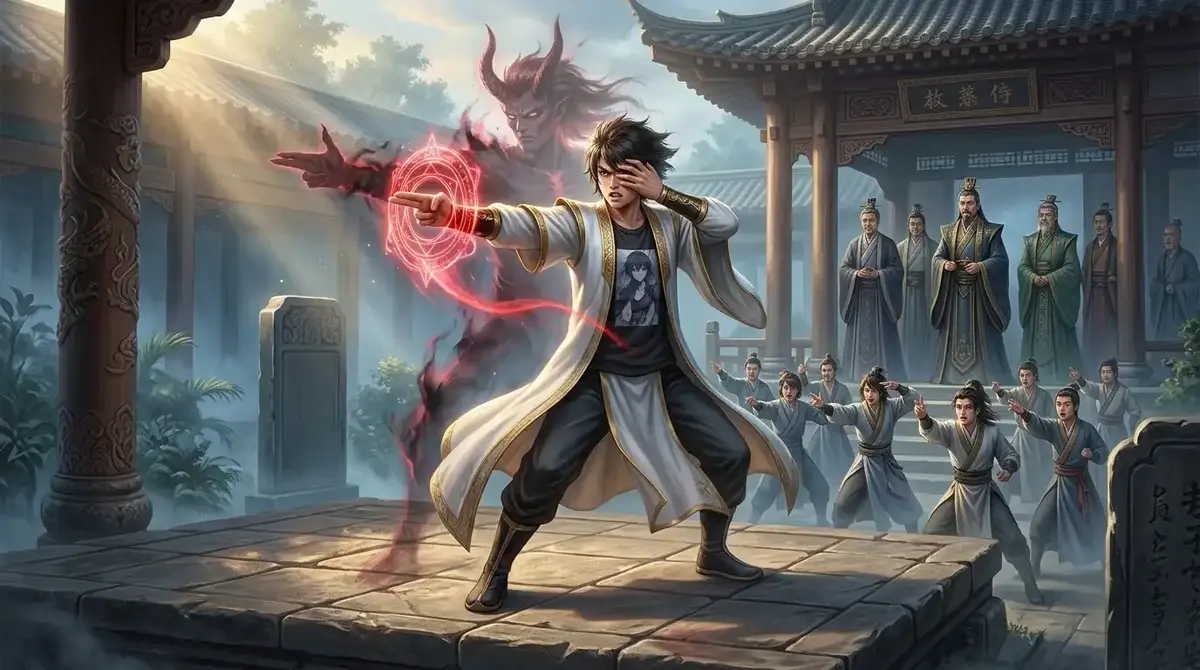
Layer one: the absurd surface. The hero names his techniques after anime moves, argues with his own shadow, and keeps a diary titled “Chronicles of the Sealed Sovereign.” Readers laugh.
Layer two: the mechanical payoff. The world’s rules quietly validate him. His “imaginary friend” turns out to be a bound spirit. His “signature move” triggers a real technique because intent matters more than form. Readers cheer.
Layer three: the emotional truth. Underneath the theatrics sits a person who refused to accept a small life. His delusion is armor against a world that told him to shrink. Readers recognize themselves.
The best chunibyo in the cultivation world stories keep all three layers spinning at once. Comedy pulls readers in. Mechanics keep them invested. Emotion makes them stay.
Chunibyo in the Cultivation World vs. Classic Cultivation Fiction
| Dimension | Classic Cultivation Fiction | Chunibyo in the Cultivation World |
| Hero’s starting belief | “I must earn power” | “I already am power” |
| Training method | Meditation, forms, discipline | Roleplay, self-narration, conviction |
| Rival’s view of hero | Contempt | Confusion, then dread |
| Source of techniques | Ancient manuals | Improvised, named on the spot |
| Comedy engine | Side characters | The hero’s sincerity itself |
| Power ceiling | Defined by realm | Defined by how far he believes |
| Reader payoff | Watching strength grow | Watching doubt die |
Classic cultivation fiction asks readers to admire the climb. Chunibyo in the cultivation world asks readers to remember their own summit, the one they imagined before anyone told them it was impossible.
How Does the World Respond to a Chunibyo Hero?
The world’s reaction drives the genre’s best scenes. It moves through four predictable stages, and each stage delivers a different pleasure.
- Stage one: dismissal. Elders wave him off. Disciples mock his robes and his titles. The hero ignores them completely, which infuriates them more.
- Stage two: confusion. His improvised technique works. Nobody can explain why. Scholars argue. Rivals grow nervous.
- Stage three: fear. His reputation outgrows the jokes. People start repeating his self-given titles without irony, because saying them feels safer.
- Stage four: adoption. The sect’s youngest disciples copy his mannerisms. His “nonsense” becomes curriculum. The hero, meanwhile, has already moved on to a new fantasy.
This progression gives chunibyo in the cultivation world its signature rhythm. Every arc resets the cycle at a higher tier, and every reset feels earned because the hero never once changed his personality to match the world’s expectations.
What Kinds of Chunibyo Heroes Exist in Cultivation Fiction?
Not every delusional hero operates the same way. Four recognizable types dominate the genre.
The Sealed Sovereign. He believes his true power is locked away and will return on a prophesied day. Every setback becomes “part of the seal weakening.” This type generates patience-based comedy and explosive payoffs.
The Reincarnated Overlord. He insists he ruled a forgotten empire in a past life. His “memories” occasionally contain real techniques from that era, which makes everyone around him deeply uncomfortable.
The System Dreamer. He treats the cultivation world as a game he has already beaten. He optimizes, speedruns, and talks to invisible interfaces that may or may not exist. This type suits readers who love meta-humor.
The Righteous Lunatic. He assigns himself a grand mission—purge evil, protect the weak—and pursues it with zero regard for sect politics. His moral clarity is so absolute that it bends the world around him.
Each type produces a different flavor of chunibyo in the cultivation world. The strongest stories sometimes blend two types into one hero, creating a protagonist who is both ridiculous and genuinely dangerous.
Why Does This Genre Keep Its Readers for Hundreds of Chapters?
Serialized cultivation fiction lives or dies on momentum. Chunibyo in the cultivation world solves the momentum problem with a structural advantage: the hero’s personality is a renewable engine.
In classic cultivation stories, tension often comes from the hero doubting himself or facing a realm he cannot cross. That tension depletes as the hero grows stronger. Chunibyo heroes never run out of material because their internal narrative expands with every new challenge.
A sealed sovereign who discovers a new layer of his “seal” has fresh motivation. A reincarnated overlord who remembers a new fragment of his “empire” has fresh stakes. The delusion grows to fit the story, and the story grows to fit the delusion.
Reader discussions on platforms like Novel Fire frequently praise this quality in similar works—the sense that the protagonist’s internal world keeps producing new content even when the external plot slows down.
How Should Writers Handle Chunibyo in the Cultivation World Without Breaking Immersion?
Writers face one central risk: if the delusion becomes too convenient, readers disengage. Four rules keep the genre honest.
- Make belief costly. The hero’s certainty should isolate him, frustrate his allies, and occasionally lead him into traps.
- Give the world its own logic. The cultivation system must exist independently of the hero’s imagination. His delusion interprets the system—it does not replace it.
- Let doubt exist in others, not in him. The hero’s unwavering belief works best when surrounded by characters who waver, argue, and eventually convert.
- Ground the power in effort. Even a delusional hero should train, fail, and adjust. The delusion supplies direction. Practice supplies results.
Writers who follow these rules produce chunibyo in the cultivation world that reads as character-driven fantasy rather than wish-fulfillment comedy. The genre’s ceiling rises with every writer who respects its mechanics.
What Makes the Chunibyo Hero’s Emotional Journey Universal?
Strip away the robes and the shouted attack names, and the chunibyo hero carries a burden every reader understands. He built a version of himself the world refused to accept.
His journey is not about gaining power. It is about earning permission to be who he already was.
That arc resonates across cultures because the experience is universal. Children are told to be realistic. Teenagers are told to grow out of their phases. Adults are told to accept their limits. The chunibyo hero refuses all three instructions, and the cultivation world rewards his refusal.
Readers who finish these stories often describe a strange sensation: the urge to take their own buried dreams a little more seriously. That response is the genre’s highest achievement. It entertains first, then quietly rebuilds something the reader thought was gone.
FAQ
Q: What is chunibyo in the cultivation world?
A: It is a genre where a protagonist with exaggerated self-belief and theatrical fantasies enters a world that rewards conviction. His “delusions” gradually manifest as real power, turning his perceived flaw into his greatest strength.
Q: Is chunibyo in the cultivation world just comedy?
A: No. Comedy drives the surface, but strong entries layer in mechanical payoff and emotional truth. The hero’s delusion is armor, and the story’s best moments come when that armor is tested.
Q: How is this different from a standard underdog story?
A: An underdog starts weak and earns power. A chunibyo hero starts convinced he is already powerful and bends the world to match his belief. The narrative engine is conviction, not training.
Q: Why do readers relate to such an absurd protagonist?
A: Because everyone has buried a version of themselves that seemed too big for the world. The chunibyo hero refuses to bury it. Readers watch him succeed and feel, briefly, that their own buried self might have been right.
Q: Does the hero ever lose his delusion?
A: Rarely, and when it happens the story usually suffers. The hero’s arc refines his belief rather than erasing it. He learns what to protect, not how to be normal.
Q: What should a reader look for in a quality chunibyo cultivation story?
A: Three signs: a hero who genuinely believes (not pretends), a world with independent rules, and side characters who challenge rather than worship him. These three elements separate lasting stories from disposable ones.
Conclusion
Chunibyo in the cultivation world works because it refuses to let the world decide what is real. The hero’s imagination is not a phase to outgrow. It is a weapon, a compass, and a declaration of worth that no elder’s dismissal can silence.
Find a story in this genre. Read it with the lights low and your old childhood certainty close at hand. Then do something bolder: take one buried belief of your own and give it a chapter.
The world has already told you what you are. Write a different answer.
Featured Guides
Blogs Chunibyo in Cultivation World: Why the “Delusional” Hero Always Wins ✍…

Blogs Chunibyo in Cultivation World: Why the “Delusional” Hero Always Wins ✍…
Blogs Chunibyo in Cultivation World: Why the “Delusional” Hero Always Wins ✍…